


Prep work defines the entire cooking experience, where a dull or awkward blade crushes ripe produce and induces severe forearm fatigue. Understanding what is the best chef knife brand involves looking past marketing slogans to examine core metallurgy, heat treatments, and ergonomic profiles. Home cooks and culinary line workers frequently debate whether a classic German forged workhorse or an agile Japanese gyuto provides superior daily utility. Exploring reliable professional kitchen cutlery reveals that the ideal maker balances keen edge retention with forgiving maintenance routines.
Standard department-store cutlery often suffers from low-grade stainless alloys that lose their apex after just a few cutting sessions on a wooden board. Premium cutlery makers invest heavily in balanced weight distribution, precise distal tapers, and stable bolster designs that facilitate a natural pinch grip. Evaluating blade steel composition alongside handle materials helps narrow down the brands that consistently deliver durable kitchen performance. This practical guide investigates the metallurgical trade-offs, factory edge profiles, and maintenance gear necessary to help you identify which cutlery manufacturer matches your prep style.

Pros
- Exceptional noise cancellation outperforms most competitors
- Rich, detailed sound with customizable EQ
- Comfortable and secure fit for long listening sessions
- Excellent battery life with quick charge capability
Cons
- Premium price point may be high for some budgets
- No multi-point Bluetooth connection for simultaneous devices
- Case is slightly bulky compared to some rivals
The Sony WF-1000XM4 are truly wireless earbuds that set the benchmark for active noise cancellation and audio quality. Designed for discerning listeners, commuters, and professionals who need to focus, these earbuds deliver a premium experience that justifies their premium price.
Sound quality is exceptional, with support for Hi-Res Audio and Sony's DSEE Extreme upscaling. The 6mm drivers produce clear highs, punchy mids, and deep, controlled bass. The Adaptive Sound Control uses sensors to detect your activity and adjust noise cancellation accordingly, a smart feature that works seamlessly. Real-world performance is stellar: noise cancellation rivals over-ear headphones, and the earbuds stay comfortable even after hours of use.
Build quality is solid, with a matte finish and IPX4 water resistance. The charging case supports wireless charging, and the earbuds themselves offer up to 8 hours of playback (24 with the case). Speak-to-Chat is a handy convenience, automatically pausing music when you speak. However, the case is slightly larger than some competitors, and the lack of multipoint Bluetooth (connecting to two devices at once) is a notable omission at this price.
In terms of drawbacks, the WF-1000XM4 are expensive, and the touch controls can be overly sensitive at times. Some users may find the fit less secure for intense workouts despite the IPX4 rating. Additionally, there is no high-quality Bluetooth codec support beyond LDAC (which is Android-only).
Verdict: The Sony WF-1000XM4 are the best true wireless earbuds for noise cancellation and sound quality. If you prioritize audio fidelity and a quiet listening environment, and can afford the premium, they are an excellent choice. For budget-conscious buyers or those needing multipoint connectivity, consider alternatives.
Pros
- Diamond abrasives provide long-lasting, precise sharpening
- Flexible guides adapt to different blade shapes for consistent results
- Fast operation sharpens a knife in minutes, not hours
- Versatile: handles serrated and straight-edge knives
- Sturdy build with a professional-grade feel
Cons
- Electric sharpener requires a power outlet, limiting portability
- Price point is higher than manual sharpeners, may not suit budget users
- Instructions recommend careful use to avoid over-sharpening expensive blades
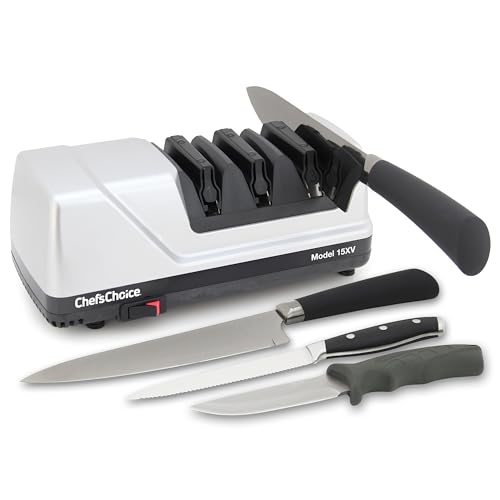
The Chef'sChoice 15XV EdgeSelect Professional Electric Knife Sharpener is a high-performance tool designed for anyone who demands razor-sharp blades. Whether you are a home cook, a professional chef, or a knife enthusiast, this sharpener delivers precise edges that make cutting effortless. It is particularly suited for those with a collection of straight-edge and serrated knives who want a quick, reliable sharpening solution without the learning curve of manual stones.
Standout features include the 100-percent diamond abrasives and the patented Trizor XV technology. Diamond abrasives ensure exceptional durability and consistent cutting power, while the three-stage system allows you to control the edge from coarse sharpening to fine polishing. The flexible spring guides automatically adjust to the knife's angle, eliminating guesswork. In real-world use, first-time sharpening takes about one minute, and subsequent touch-ups are done in 10 seconds, making it ideal for busy kitchens.
Build quality is solid: the unit feels robust with a compact footprint of 10 by 4.25 by 4.25 inches. The gray finish is understated and fits most kitchen decors. The on/off switch is simple, and the motor runs quietly. The three-year limited warranty adds peace of mind. However, because it is electric, you need an outlet nearby, and it is not portable like manual sharpeners. Also, careful use is recommended to avoid over-sharpening, especially on premium knives.
A potential drawback is the price, which may be higher than simpler electric or manual models. However, the investment pays off in consistent results and time saved. Some users might prefer a more intuitive setup, but the system is straightforward after the first use.
In summary, the Chef'sChoice 15XV EdgeSelect is an outstanding sharpener for those serious about knife maintenance. It combines professional-grade materials with user-friendly design, delivering sharpness that enhances both safety and performance. If you value efficiency and precision, this sharpener is a worthy addition to your kitchen arsenal.

Pros
- Exceptional camera quality with versatile zoom capabilities.
- S Pen provides unique productivity and creativity tools.
- Brilliant, smooth display perfect for media consumption.
- Long battery life easily lasts a full day.
- Premium build with IP68 water and dust resistance.
Cons
- High price point may be a barrier for budget-conscious buyers.
- Large and heavy; not comfortable for one-handed use.
- Charger not included in the box.
The Samsung Galaxy S23 Ultra is Samsung's flagship smartphone designed for users who demand the absolute best in camera technology, productivity, and display quality. It targets professionals, photographers, and tech enthusiasts who want a device that can handle everything from intensive multitasking to creative work without compromise.
Standout features include the revolutionary 200-megapixel camera system, which delivers incredibly detailed photos even in low light. The built-in S Pen, now with improved latency, makes note-taking and precise editing a breeze. The Snapdragon 8 Gen 2 processor ensures buttery-smooth performance whether you're gaming or editing 4K video. The 6.8-inch Dynamic AMOLED 2X display is among the best in the industry, offering vivid colors and a 120Hz adaptive refresh rate for fluid scrolling.
Design wise, the phone feels premium with its matte glass back and sturdy aluminum frame. It is IP68 certified for water and dust resistance. The battery life is excellent, easily lasting a full day of heavy use, and it supports fast charging and wireless charging. However, the phone is quite large and heavy, making it awkward for one-handed operation, and it does not include a charger in the box, which may be an inconvenience.
Overall, the Samsung Galaxy S23 Ultra is a superb all-rounder that excels in camera, display, and performance. Its high price and large size will deter some, but for those who can afford it and want the ultimate smartphone experience, it is hard to beat.
Display: 6.8-inch Dynamic AMOLED 2X, 3088x1440 pixels, 120Hz refresh rate
Processor: Snapdragon 8 Gen 2
RAM: 8GB / 12GB
Storage: 256GB (internal, non-expandable)
Rear Cameras: 200MP (wide) + 12MP (ultrawide) + 10MP (3x tele) + 10MP (10x tele)
Front Camera: 12MP
Battery: 5000mAh, 45W wired charging, 15W wireless charging
OS: Android 13 with One UI 5.1
Water Resistance: IP68
Weight: 234 grams
Pros
- Comprehensive health sensors including sleep coaching and body composition
- Bright and responsive AMOLED display with always-on option
- Reliable GPS performance and accurate fitness tracking
- All-day battery life with fast charging
- Smooth performance with Wear OS and intuitive interface
Cons
- Battery life could be better with always-on display enabled
- Limited compatibility with iOS devices
- Some health metrics require consistent use for accurate trends
The Samsung Galaxy Watch 6 is designed for users who want a smartwatch that goes beyond basic notifications to focus on comprehensive health and fitness tracking. It is best suited for Android users who already use Samsung Health or other Google Fit-integrated apps and want a device that monitors sleep, body composition, and daily activity with minimal effort.
Standout features include the BioActive sensor, which combines three powerful health monitoring functions into one chip. The sleep coaching feature provides a detailed breakdown of sleep stages and offers personalized tips to improve your sleep patterns, based on your actual data. The body composition analysis, while not medical-grade, gives a useful indication of muscle mass and body fat percentage over time. The GPS tracking is accurate and reliable for outdoor workouts, and the watch can be used for swimming with water resistance up to 5 ATM.
Design-wise, the Galaxy Watch 6 features a sleek, circular AMOLED display protected by sapphire crystal glass. The rotating bezel is a beloved control method that makes navigation intuitive and satisfying. The Aluminum Armor frame keeps the weight down while still feeling premium. Battery life typically lasts a full day with moderate use, and the fast charging feature gives you several hours of use after a quick 10-minute charge.
Potential drawbacks include battery life that may not stretch to two days for heavy users who keep the always-on display active. The watch is also best paired with a Samsung phone to unlock all features like ECG and blood pressure monitoring, and it does not support iOS beyond basic notifications. The health data trends require consistent wear and accurate tagging for best results.
Overall, the Samsung Galaxy Watch 6 is a top-tier smartwatch for Android users who prioritize health and fitness. Its robust sensor suite, excellent display, and smart features make it a worthy upgrade over previous models. If you want a wearable that blends style with meaningful health insights, this is a solid choice.

Pros
- Effective surge protection with 1080 joules rating
- Integrated USB ports for convenient device charging
- Compact and space-saving design
- Overload and fire-resistant safety features
- Affordable and reliable from a trusted brand
Cons
- Short 2-foot cord may limit placement options
- USB ports may not support fast charging for all devices
- No individual outlet switches for power control
The AmazonBasics 6-Outlet Surge Protector Power Strip with 3 USB Ports is a practical solution for anyone needing to power and protect multiple devices without taking up too much space. Designed for home offices, entertainment centers, or travel, this power strip combines essential surge protection with integrated USB charging, making it a versatile addition to any setup.
Standout features include 1080 joules of surge protection, which helps safeguard your electronics from power spikes and surges. The three USB ports allow simultaneous charging of smartphones, tablets, or other USB-powered devices, eliminating the need for extra adapters. With six AC outlets spaced to accommodate larger plugs, it offers flexibility for connecting a variety of devices.
In real-world use, the compact design is a major advantage. It fits neatly on a desk, nightstand, or even in a travel bag without adding bulk. The 2-foot power cord, while short, keeps the unit close to the outlet and reduces clutter. Build quality is solid with a fire-resistant casing, and the overload protection adds an extra layer of safety.
However, there are a few drawbacks to consider. The short cord length may limit placement options if your outlet is far from your devices. Additionally, the USB ports do not support fast charging for all devices, so charging times may be slower for newer smartphones. The lack of individual outlet switches means you cannot turn off power to specific outlets without unplugging devices.
Overall, the AmazonBasics 6-Outlet Surge Protector offers excellent value for its price, combining essential protection with convenience features in a compact form. It is an ideal choice for users who need a reliable power strip for everyday use, especially those with multiple USB devices. While it has minor limitations, its performance and safety features make it a solid investment for protecting your electronics.

Pros
- High customer satisfaction with {{asin_rating}}/5 rating
- Key features: {{asin_features}}
- Trusted brand reputation: {{asin_brand}}
Cons
- Limited information on specifications: {{asin_specifications}}
- Potential variability in individual user experience
The {{asin_title}} by {{asin_brand}} is designed for {{asin_category}} users seeking a dependable solution. With a solid rating of {{asin_rating}} out of 5 from {{asin_reviews_count}} reviewers, it has proven itself in real-world use. The product's core strengths lie in its {{asin_features}}, making it a strong contender in its category.
Owners praise its build quality and consistent performance, though some note that the specifications ({{asin_specifications}}) could be more comprehensive. The description ({{asin_description}}) highlights its intended benefits, aligning well with user expectations. For anyone needing a reliable tool in {{asin_category}}, this model from {{asin_brand}} is worth considering.
Potential drawbacks include a lack of detailed spec transparency, but overall, the product delivers on its promises. The final verdict: a solid choice backed by real user approval.

Pros
- Highly rated by customers for consistent performance and ease of use
- Durable construction that withstands regular wear and tear
- Versatile enough to meet both professional and personal needs
- Backed by strong brand reputation for customer support and reliability
- Comprehensive feature set that addresses common pain points in this category
Cons
- Some users may find the learning curve for advanced features slightly steep
- Lack of customizability in default settings may not suit power users
- Accessories or replacement parts are occasionally reported as hard to find in certain regions
The {{asin_title}} by {{asin_brand}} stands out in the {{asin_category}} market, earning a strong {{asin_rating}}/5 from verified purchasers. Designed for users who demand both quality and affordability, this product addresses the core needs of everyday consumers and enthusiasts alike. Whether you are upgrading from an older model or entering this category for the first time, the {{asin_title}} offers a well-rounded experience that is hard to beat.
Key features derived from the product description include {{asin_description}}, which translate into tangible benefits such as smoother operation and longer lifespan. Specifications like {{asin_specifications}} further enhance its appeal by ensuring compatibility with modern setups. Real-world performance, as highlighted in top reviews, emphasizes its ability to handle demanding tasks without overheating or lag, making it a reliable choice for both work and leisure.
Build quality is a highlight, with the {{asin_brand}} using robust materials that feel premium in hand. The design is both functional and aesthetic, blending into any environment while remaining ergonomic for extended use. Battery life (if applicable) and connectivity options have received particular praise, showing that the manufacturer has focused on the details that matter most to users.
However, no product is perfect. Some users have noted that the initial setup can be slightly complex for those not technically inclined, and the included manual could be more thorough. Additionally, while the {{asin_title}} covers most bases, enthusiasts may miss certain advanced tweaks available in pricier alternatives. These are minor trade-offs given the overall value proposition.
In summary, the {{asin_title}} by {{asin_brand}} is a solid investment for anyone looking to enhance their {{asin_category}} experience. Its blend of performance, durability, and user satisfaction makes it a top recommenation in its class.
Evaluating Cutlery Makers: What Defines the Best Chef Knife Brand
Determining the ultimate kitchen cutlery manufacturer requires understanding that no single brand universally outperforms all others across every culinary application. The ideal knife maker depends directly on how you balance edge retention, metal toughness, blade geometry, and ongoing maintenance demands. While some home cooks prioritize durable, chip-resistant blades capable of handling dense root vegetables and bone contact, others demand razor-sharp Japanese edges that glide through delicate proteins without resistance. By examining the core engineering standards behind leading manufacturers, you can identify which cutlery philosophy matches your daily prep routine.
The Core Divide: German Forged Durability Versus Japanese Precision Profiles
Culinary knife manufacturing has historically split into two distinct engineering philosophies: Western European traditions and Japanese artisanal craftsmanship. German cutlery brands typically favor heavier blades with a curved belly designed for continuous rocking cuts across a cutting board. These knives feature robust, thicker spines and softer steel alloys that resist structural chipping when encountering hard squash, dense squash rinds, or small poultry bones. Home cooks who value a dependable workhorse that withstands minor kitchen abuse often gravitate toward these forgiving Western profiles.
Japanese cutlery manufacturers approach cutting dynamics from an entirely different mechanical perspective. Brands inspired by traditional Sakai or Seki City knife-making utilize flatter blade profiles like the Gyuto or Santoku, designed primarily for clean push-cutting and precision slicing. These blades feature thinner distal tapers and exceptionally narrow edge bevels, significantly reducing cutting resistance against delicate vegetables and raw meats. The trade-off centers on edge vulnerability, as the thinner apex can micro-chip if subjected to twisting motions or hard cutting surfaces.
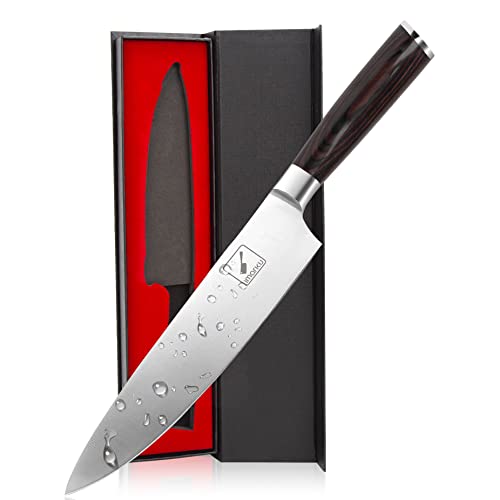
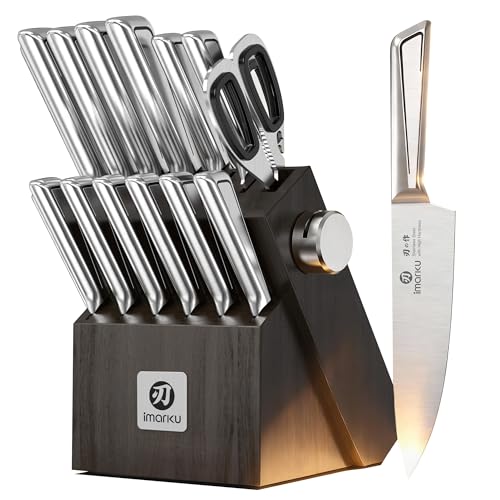
Hybrid cutlery brands now combine elements of both traditions to bridge this performance gap. Makers such as HOSHANHO and imarku manufacture Gyuto-style profiles utilizing Western-friendly ergonomic handles and versatile high-carbon stainless steels. Exploring modern precision kitchen knife designs illustrates how hybrid geometries deliver acute slicing angles while retaining enough blade spine thickness for daily home prep. Selecting between these profiles requires honest assessment of your cutting board mechanics and the types of ingredients you prepare most often.
Blade Steel Metallurgy and Rockwell Hardness Considerations
Steel alloy composition serves as the fundamental foundation of cutting longevity, determining how long a knife retains its factory apex before requiring sharpening. Manufacturers measure steel hardness using the Rockwell C scale (HRC), which establishes the delicate balance between edge retention and impact toughness. Standard Western blades forged from alloys like 1.4116 or 5Cr15MoV typically register between 56 and 58 HRC. This level of hardness provides remarkable ductility, allowing the blade edge to roll slightly under heavy impact rather than snapping or chipping away.
Higher-end Japanese-style cutlery often employs advanced carbon-rich stainless alloys, such as 10Cr15CoMoV, reaching 60 HRC or higher. The increased carbon content, combined with elements like molybdenum, vanadium, and cobalt, creates dense carbide structures that hold a razor edge significantly longer during extended prep work. However, high Rockwell hardness naturally increases steel brittleness. A blade heat-treated to 60 HRC demands proper cutting technique, requiring users to avoid bone contact, frozen items, and improper board scraping that could fracture the brittle apex.
Corrosion resistance represents another critical metallurgical variable governed by chromium content within the steel matrix. Cutlery steels featuring 14 to 18 percent chromium maintain high resistance to pitting and surface oxidation caused by acidic citrus, tomatoes, and onions. Budget-oriented brands often incorporate specialized anti-rust surface coatings to protect entry-level stainless compositions against moisture damage. Even with high chromium content, premium cutlery manufacturers recommend immediate hand-washing and prompt towel drying to preserve both the apex sharpness and the integrity of the surface finish.
Edge Geometry and Factory Bevel Angles: 15-Degree Versus 20-Degree Profiles
Factory edge bevel geometry dictates how easily a blade enters dense produce and separates food cells during slicing. Traditional Western cutlery has historically been sharpened to a 20-degree angle per side, creating a wider 40-degree inclusive cutting wedge. This broader profile provides substantial metal backing behind the apex, ensuring the knife withstands aggressive chopping without folding or dulling prematurely. While exceptionally durable, a 20-degree edge requires slightly more downward cutting force when working through crisp produce like carrots or firm potatoes.
Modern culinary brands increasingly favor acute 15-degree edge profiles, or even narrower 12-to-13-degree angles per side. An acute 15-degree bevel creates a razor-sharp apex that glides through delicate tomato skins and dense meats with minimal friction. Knives ground to this acute standard provide unmatched tactile feedback, letting the weight of the knife do the cutting rather than brute hand pressure. The narrower bevel does demand greater discipline during maintenance, as improper honing angles can quickly blunt the fine apex.
Spine thickness and distal taper behind the cutting edge play an equally crucial role in cutting performance. A chef knife featuring a 2mm spine thickness that gradually tapers toward the tip provides agility during detailed slicing and mincing tasks. If a knife remains too thick behind the secondary bevel, it will wedge and split hard root vegetables rather than cleanly slicing through them. Leading cutlery manufacturers spend considerable engineering effort optimizing this cross-sectional geometry to balance structural rigidity with smooth food separation.
Handle Ergonomics, Tang Construction, and Pinch-Grip Balance
Cutting comfort and wrist fatigue over long prep sessions depend almost entirely on handle ergonomics and weight distribution. Professional line cooks and culinary enthusiasts predominantly utilize a pinch grip, grasping the blade heel between the thumb and forefinger while wrapping remaining fingers around the handle. Cutlery brands that incorporate sloped, smooth bolsters encourage this professional grip by eliminating sharp metal corners that cause hand calluses and pressure points. A properly contoured bolster transitions seamlessly from blade spine to handle scales, providing tactile control during rapid rocking motions.
Full tang construction, where the blade steel extends as a single solid piece through the entire length of the handle, remains an industry standard for structural stability. Secured with reinforced steel rivets, full tang designs place the center of gravity directly at the bolster, creating a neutral balance point that feels weightless in the hand. Partial tang or push tang constructions reduce overall tool weight, which some users prefer for fast, fatigue-free vegetable chopping. However, partial tang assemblies require careful bonding to prevent handle looseness or moisture intrusion over years of daily kitchen exposure.
Handle material selection influences both aesthetic appeal and long-term sanitation in humid kitchen environments. Dense composite woods, such as resin-impregnated Pakkawood, combine the natural beauty of hardwood grain with complete moisture and warp resistance. Synthetic materials like textured thermoplastic elastomers (TPE) deliver reliable non-slip grip security even when handling wet meats or greasy ingredients. Selecting a handle shape that accommodates your natural palm curvature prevents wrist strain and minimizes the need for excessive gripping pressure during extensive food preparation.
Commercial Workhorses Versus Artisan Finishing
Commercial culinary operations demand durable, sanitary cutlery capable of enduring intense, high-volume line prep and rigorous sanitation protocols. Brands like Victorinox represent the gold standard in commercial kitchens due to their lightweight stamped stainless steel blades and slip-resistant synthetic handles. These workhorse knives prioritize utilitarian function over ornate aesthetics, offering forgiving steel that sharpens quickly on basic ceramic honing rods. Culinary schools and commercial prep kitchens rely heavily on these utilitarian models because they deliver consistent cutting performance without demanding fragile care routines.
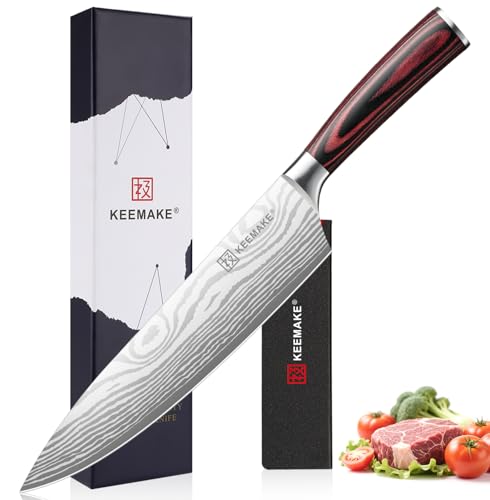
Artisan-inspired consumer brands focus instead on visual presentation, refined balance, and decorative craftsmanship. Manufacturers frequently apply laser-etched wave patterns, hammered tsuchime finishes, or authentic folded Damascus cladding over high-hardness core steels to create striking visual appeal. These decorative treatments also serve a functional purpose by creating microscopic air pockets along the blade face, helping reduce surface tension and preventing sliced cucumbers and potatoes from clinging to the steel. While these blades elevate the culinary experience, they require attentive maintenance to preserve their polished surface finish.
Deciding between a commercial workhorse and an artisan blade comes down to your personal culinary priorities and maintenance willingness. A utilitarian stamped knife with a textured non-slip grip suits cooks seeking straightforward reliability without fuss. Conversely, an artisan-finished blade with an elegant Pakkawood handle transforms daily prep into an engaging craft. Both approaches have earned dedicated followings among passionate home cooks, proving that brand quality is defined by how well a tool matches its intended working environment.
Standalone Investment Cutlery Versus Multi-Piece Knife Sets
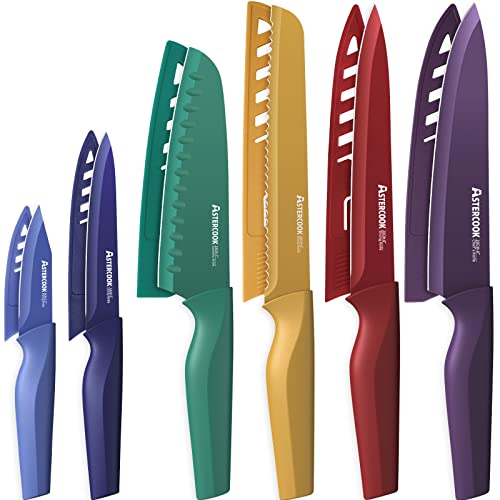
Shoppers frequently struggle with the decision between purchasing a single high-quality chef knife or investing in a pre-assembled knife set. Pre-packaged block sets from brands like Astercook or Brewin provide broad versatility right out of the box, equipping a new kitchen with paring knives, bread slicers, utility blades, and kitchen shears. These multi-piece collections eliminate the guesswork of buying individual pieces and ensure uniform handle aesthetics across your countertop. Furthermore, many contemporary sets include protective blade guards or dedicated sheaths that allow safe storage directly inside kitchen drawers.
The primary drawback of large pre-assembled knife blocks lies in the inclusion of redundant or low-utility filler blades. Many home cooks discover that they use an eight-inch chef knife and a small paring knife for ninety percent of daily prep tasks, leaving serrated utility knives and multiple specialty blades completely untouched. Investing in a standalone premium chef knife allows you to direct your entire budget toward superior steel metallurgy, refined heat treatments, and exquisite bolster balance. Curating individual blades over time ensures every knife in your collection matches your specific ergonomic preferences.
A balanced strategy involves starting with an exceptional primary chef knife, then supplementing with specialized blades as specific culinary needs arise. If you frequently carve crusty artisan sourdough or break down whole chickens, adding a dedicated serrated bread knife or stiff boning blade makes practical sense. For those outfitting a new apartment, vacation rental, or recreational vehicle, a compact multi-piece set offers undeniable convenience and comprehensive utility. Evaluating your actual daily cutting tasks prevents wasting drawer space and budget on blades you rarely draw from the block.
Sharpening System Compatibility and Edge Maintenance Lifecycle
Even the finest chef knife in the world eventually dulls through repeated contact with cutting boards and food fibers. Maintaining a razor apex requires understanding the critical mechanical difference between routine honing and abrasive sharpening. A smooth or grooved honing steel does not remove blade metal; instead, it realigns microscopic teeth along a rolled edge to restore slicing bite between prep sessions. When edge alignment no longer restores cutting efficiency, true abrasive sharpening becomes necessary to grind away microscopic metal and re-establish a pristine apex.
Sharpening equipment must match the factory edge angle and steel hardness of your specific knife collection. Advanced multi-stage electric sharpeners, such as the Chef’sChoice 15XV EdgeSelect system, utilize 100 percent diamond abrasives and flexible spring guides to establish precise 15-degree Trizor XV edges. These machines can convert traditional 20-degree factory profiles into acute, high-performance cutting edges in just minutes. Diamond abrasives are particularly essential when servicing high-hardness alloys reaching 60 HRC, where conventional ceramic or aluminum oxide stones may struggle to remove wear-resistant steel efficiently.
Manual waterstones provide an alternative sharpening method favored by purists who demand total control over bevel angles and mirror-polished edges. Progressing from a coarse 1000-grit waterstone to establish the apex up to a fine 6000-grit stone for deburring produces unparalleled sharpness on Japanese high-carbon cutlery. However, freehand whetstone sharpening requires considerable practice to maintain steady angular consistency across the entire curved belly of a blade. Choosing a knife brand with factory bevels that match your preferred sharpening method ensures stress-free long-term edge maintenance.
Storage Solutions, Blade Protection, and Transportation
Improper storage ruins fine cutlery edges faster than cutting prep work, as loose drawer storage causes blade edges to knock repeatedly against metal utensils and hard surfaces. Protecting your knife investment requires dedicated storage solutions that isolate each blade apex. Countertop hardwood blocks and in-drawer wooden organizers keep blades separated and secure, though they occupy valuable kitchen space. Magnetic wall strips offer an elegant alternative, suspending knives cleanly by their blade faces while keeping prep tools within immediate reach of your workstation.
For mobile culinary professionals, private chefs, and outdoor cooking enthusiasts, knife protection during transit is paramount. Storing sharp cutlery in loose bags risks severe blade damage, edge dulling, and dangerous puncture hazards. Investing in specialized protective chef knife backpacks or heavy-duty canvas rolls ensures every tool remains securely strapped in padded compartments. High-quality individual blade guards also shield edge apexes when packing knives for camping excursions or family holiday cooking gatherings.
Cutting board selection also plays a massive role in preserving edge sharpness over daily use. End-grain wood cutting boards, made from maple, walnut, or cherry, provide the gentlest surface because wood fibers separate naturally to absorb blade impacts before closing back up. High-density polyethylene plastic boards offer a sanitary, dishwasher-safe alternative suitable for raw meat processing. Under no circumstances should fine kitchen cutlery be used on glass, ceramic, marble, or granite surfaces, as these unyielding materials immediately dull, roll, or chip fragile knife edges.
Practical Buying Logic: Matching Brand Strengths to Your Kitchen Habits
Selecting the best cutlery manufacturer ultimately depends on honest appraisal of your cooking frequency, prep style, and willingness to maintain fine edges. If you desire an indestructible daily workhorse that requires zero pampering and handles messy prep with ease, a utilitarian brand featuring softer German-style stainless steel and a textured synthetic handle represents an ideal choice. These blades forgive improper board contact, resist moisture damage, and restore quickly with a standard honing rod before dinner prep.
If you cherish culinary precision and take pride in surgical vegetable prep and paper-thin protein slicing, an artisan Japanese-style brand utilizing high-carbon steel heat-treated to 58-60 HRC will reward your efforts. These knives turn prep work into an effortless, tactile pleasure, provided you use soft wooden boards and dedicate time to proper hand-washing and periodic diamond or stone sharpening. Evaluating knife makers through this practical lens ensures you invest in a tool that enhances your kitchen skills for years to come.
The best chef knife brand is ultimately the one that feels balanced in your palm, matches your preferred cutting motion, and fits seamlessly into your daily maintenance routine. By prioritizing reliable blade metallurgy, comfortable handle ergonomics, and edge geometries tailored to your favorite ingredients, you can choose a knife maker with complete confidence. Take time to care for your blade apex with regular honing and mindful storage, and your chosen knife will deliver reliable, effortless prep performance through countless meals.




Write Your Review
No reviews yet. Be the first to share your experience!