
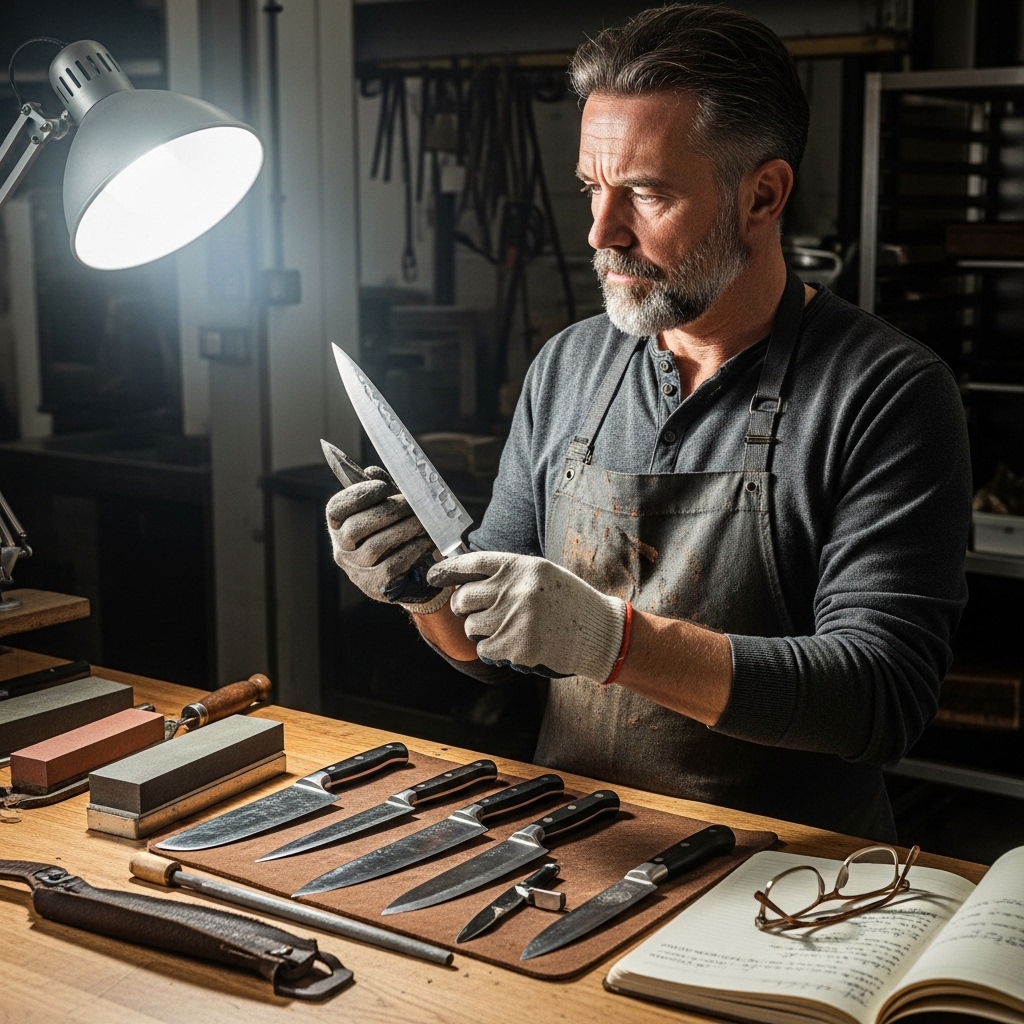

Selecting a dependable outdoor cutting tool often comes down to how well the blade steel handles heavy impact without chipping or snapping along the spine. When knife owners investigate %what is cold steel made of%, they usually discover that the brand relies heavily on proven high-carbon alloys, wear-resistant tool steels, and shock-absorbing synthetic grips. Cold Steel built its reputation on extreme durability, choosing blade steels like Japanese-origin SK-5 and German D2 over fragile decorative materials. Understanding these core alloys helps hunters, bushcrafters, and tactical users choose the right tool for tough tasks.
Many outdoor enthusiasts pair these rugged designs with traditional fixed blade field knives for camp chores and processing game. The materials used in modern Cold Steel cutlery balance raw tensile strength against edge retention, ensuring the blade survives chopping, batoning, and hard thrusts. By looking closely at the metallurgy, handle compounds, and sheath engineering, you can see exactly why these knives perform reliably in harsh environments. Let us inspect the primary materials that define this knife maker’s working catalog.

Pros
- Single-piece construction eliminates weak points for extreme durability
- Razor-sharp edge out of the box for precision cutting tasks
- Versatile hollow handle allows storage or handle extensions for throwing or leverage
- Included fire steel makes it a complete survival kit
- High-carbon SK-5 steel holds a sharp edge and is easy to resharpen
Cons
- Hollow handle may limit ergonomic comfort for extended use
- Steel blade requires regular maintenance to prevent rust in wet environments
- Sheath is basic and may not offer the best retention for all carry positions
The Cold Steel Bowie Blade Bushman is a no-nonsense survival knife built for the toughest outdoor conditions. Forged from a single piece of SK-5 high-carbon steel, this fixed-blade knife has no weak points, making it incredibly strong and reliable for bushcraft, hunting, and emergency situations. With a 7-inch clip point blade honed to a razor-sharp edge, it handles delicate tasks like skinning and carving with precision, while the heat treatment to RC54 ensures it stays sharp even after heavy use.
One of its standout features is the hollow handle, which doubles as storage for survival supplies like matches or fishing hooks. You can also attach handle extensions to increase reach or leverage, making it a versatile tool for throwing or prying. The knife comes with a Secure-Ex sheath that includes a Ferrocerium fire steel, giving you a reliable way to start fires in the wilderness. At 10.1 ounces, it's lightweight enough to carry on long hikes without sacrificing durability.
However, the hollow handle may not be as comfortable for extended gripping as a solid handle, and the high-carbon steel needs regular oiling to prevent rust in damp conditions. The sheath is functional but basic, so you may want to upgrade for better retention. Overall, this is a solid, affordable choice for anyone who needs a tough, versatile knife for survival or bushcraft, especially if you value the ability to customize it with extensions or store small gear inside.

Pros
- Combat-proven design used by military and SWAT teams worldwide
- SK-5 steel offers excellent durability and edge retention
- Kray-Ex handle provides a secure grip in wet or adverse conditions
- Secure-Ex sheath enables fast, safe draw and carry
- Tough, versatile tanto blade shape for piercing and cutting
Cons
- High-carbon SK-5 steel requires regular maintenance to prevent rust
- No included reviews or ratings yet, so real-world feedback is limited
- Fixed blade design may be less convenient for everyday carry than folding knives
The Cold Steel Recon Tanto is a fixed blade knife built for serious tactical use. With a 7-inch SK-5 high-carbon steel blade and a 4.75-inch Kray-Ex handle, this knife has been field-tested by military and SWAT units over the past two decades. It is designed for users who need a reliable, hard-use blade in demanding environments, from combat to survival situations.
The standout feature is the SK-5 steel blade, which offers excellent edge retention and cutting power. The razor-sharp edge is ideal for piercing and slicing, and the tanto shape adds strength for tough tasks like prying or stabbing. The Kray-Ex handle provides a secure, non-slip grip even when wet or gloved, and the Secure-Ex sheath allows for quick, safe carry and deployment.
At 8.7 ounces and 11.75 inches overall, the Recon Tanto is compact enough for tactical carry but robust enough for heavy use. The blade thickness of 5mm ensures it can handle hard impacts without chipping. However, the high-carbon steel requires regular oiling and care to prevent rust, especially in humid or wet conditions.
Overall, the Cold Steel Recon Tanto is a solid choice for anyone needing a battle-ready fixed blade. It is built to perform under pressure, though users should be prepared for basic maintenance. If you want a knife with a proven track record in real-world operations, this is a strong contender.

Pros
- Indestructible 5 mm thick German D2 blade easily tackles tough butchery jobs that would break thin kitchen knives
- Deeply checkered Kray-Ex handle provides outstanding traction when dealing with wet meat and fats
- Exceptional edge retention on rough cutting chores like rope, heavy packaging, and bone-adjacent meat prep
- Rugged Secure-Ex sheath keeps the blade safe and secure during outdoor travel and camp kitchen storage
Cons
- Thick blade spine wedges severely in dense root vegetables like sweet potatoes, carrots, and onions
- Straight dual-angle Tanto edge prevents smooth rocking motions on standard kitchen cutting boards
- Heavy 12.2-ounce weight causes hand fatigue during extended, delicate vegetable slicing sessions
While originally engineered as a tactical field knife, the Cold Steel Leatherneck Tanto easily finds a home among outdoor cooks, hunters, and knife enthusiasts as an ultra-tough camp butchery tool. Standard kitchen cutlery often suffers from chipped edges or bent tips when subjected to harsh, bone-adjacent chopping and rough meat separation. This knife bridges the gap by offering relentless durability for heavy food prep tasks that would ruin a delicate French chef knife or Japanese Santoku.
Out of the box, the 7-inch German D2 tool steel blade arrives razor-sharp with an aggressive bite that easily parts thick sinew, dense muscle tissue, and tough rind. In practical cutting scenarios, the angular American Tanto point proves handy for puncturing thick hides or piercing through vacuum-sealed meat bags without tearing them open haphazardly. However, the blade geometry is strictly linear with a distinct secondary tip, meaning traditional rocking cuts for mincing herbs or dicing celery are out of the question. Push cuts and heavy slices are where this tool finds its rhythm.
Build quality is undeniably rugged. With a blade stock measuring a full 5 mm in thickness, you never have to worry about structural failure when separating poultry joints or working through pork ribs. The 5-inch handle is molded from Kray-Ex with deep, aggressive checkering that channels away grease, meat juice, and water to keep your grip locked in place. At the rear, the machined steel butt cap acts as a functional mallet, useful for cracking stubborn crab shells, crushing whole garlic heads, or tenderizing tough steaks around the fire pit.
The obvious trade-off is kitchen finesse. At over 12 ounces, this knife is not meant for delicate vegetable work, and trying to slice an onion will split the produce rather than slice it cleanly due to the blade thickness. If you understand its role as a dedicated heavy-duty meat prep and camp utility tool, it is one of the most durable, confidence-inspiring blades you can add to your outdoor culinary gear kit.
The Cold Steel Leatherneck Tanto thrives in situations where standard kitchen cutlery simply feels too fragile. During outdoor barbecue sessions, hunting trips, or rugged campsite meal prep, you frequently encounter frozen meats, thick connective tissue, or tasks that involve cutting close to hard bone. The robust German D2 steel blade absorbs that kind of abuse without hesitation, making it an excellent companion for camp cooks who break down whole poultry, split racks of ribs, or dress game in the field.
The included Secure-Ex sheath makes it far easier and safer to pack in a camp kitchen tote or cooler bag than loose kitchen knives. The ambidextrous clip secures firmly to your belt or gear bag, ensuring immediate access whether you are stationed at the outdoor prep table or managing the smokehouse pit.
German D2 is a high-carbon, high-chromium tool steel recognized for outstanding wear resistance, but it is classified as semi-stainless rather than fully stainless. While the non-reflective black powder coat protects the majority of the blade surface, the exposed cutting edge requires basic care to stay free of surface oxidation.
Always wash this knife by hand using mild dish soap and warm water immediately after processing acidic foods like citrus, tomatoes, or seasoned meats. Avoid the dishwasher at all costs, as the harsh detergents and intense heat will degrade the Kray-Ex handle and promote rust on the bare steel edge. Dry the blade thoroughly with a towel and apply a light wipe of food-grade mineral oil along the exposed edge bevel before slipping it back into the Secure-Ex sheath.
Blade Metallurgy and Construction in Cold Steel Knives
Cold Steel knives are constructed from specialized working steels, impact-resistant elastomeric polymers, and reinforced glass-filled nylon sheaths tailored for rugged outdoor and tactical use. Rather than relying on a single generic stainless alloy, the company selects specific high-carbon tool steels such as SK-5 and air-hardening steels such as German D2 depending on the intended duty of the tool. These blade steels undergo targeted heat treatments to balance edge retention against shock absorption, and they are paired with deeply textured Kray-Ex handles or seamless forged bodies. Understanding the composition of these materials allows buyers to choose the right blade for demanding chopping, slicing, or field dressing tasks.
The Core Metallurgy Behind Cold Steel Knives
A knife blade depends fundamentally on chemical composition and heat treatment to balance strength, hardness, and wear resistance. When asking %what is cold steel made of%, the most accurate answer starts with industrial tool steels engineered for severe impact rather than decorative appearance. Cold Steel frequently selects SK-5 high-carbon steel and German D2 tool steel for its heavy-duty fixed blade lineup. Both materials offer distinct metallurgical advantages that differ substantially from soft commercial stainless steels found in entry-level cutlery.
High-carbon tool steels prioritize toughness and ease of field sharpening over complete stain resistance. Many stainless kitchen knives rely on elevated chromium levels to prevent discoloration, but large chromium carbides can chip under violent chopping impacts. Cold Steel addresses this reality by utilizing carbon-rich formulations that flex and absorb kinetic shock without snapping. This metallurgical approach makes their knives particularly popular among bushcrafters, hunters, and tactical personnel who demand absolute reliability under harsh conditions.
SK-5 High-Carbon Steel: Composition and Impact Resistance
SK-5 is a Japanese high-carbon tool steel that represents the structural backbone of Cold Steel’s working knives. Chemically equivalent to American 1080 or 1084 carbon steel, SK-5 contains approximately 0.80 to 0.90 percent carbon alongside controlled amounts of manganese and silicon. This specific balance gives the steel remarkable tensile strength and shock resistance when properly quenched and tempered. Because it lacks excessive alloying elements, SK-5 forms very fine iron carbides that take an exceptionally keen edge.
In tools like the Cold Steel Bowie Blade Bushman Durable Resistant, the SK-5 steel is heat-treated and tempered to a Rockwell hardness of RC54. While RC54 is softer than high-hardness Japanese kitchen cutlery, it provides massive structural toughness for batonning firewood and clearing brush. An edge tempered to RC54 will roll slightly under extreme abuse rather than suffering catastrophic chipping. That ductility allows outdoor adventurers to restore the cutting apex quickly in remote camps using simple sharpening stones.
Tactical blades such as the COLD STEEL Recon Tanto 7″ SK-5 Razor-Sharp Blade also utilize SK-5 to achieve balanced combat and utility performance. The 5 mm blade thickness supports demanding prying and piercing tasks where thinner blades might crack under pressure. SK-5 holds a reliable working edge through abrasive cutting tasks while remaining tough enough to survive hard impacts against bone or seasoned wood. Cold Steel applies a protective black coating to the blade flats to safeguard the reactive carbon steel against environmental moisture.
German D2 Tool Steel: Carbide Structure and Edge Retention
For cutting tasks demanding extended edge retention and superior resistance to abrasive wear, Cold Steel incorporates German D2 tool steel into its tactical line. German D2 is an air-hardening, high-carbon, high-chromium tool steel containing roughly 1.5 percent carbon and nearly 12 percent chromium. Because the chromium content sits just below the 13 percent threshold required for true stainless classification, D2 is universally categorized as a semi-stainless alloy. It provides noticeably better corrosion resistance than SK-5 while retaining the dense carbide structure of a dedicated die steel.
The high volume of hard chromium carbides within German D2 gives the blade exceptional resistance to dulling over extended cutting cycles. Knives such as the COLD STEEL Leatherneck Tanto 7″ German D2 leverage this alloy to maintain a sharp apex when cutting rope, canvas, cardboard, and fibrous materials. The air-hardening heat treatment produces a dense crystalline matrix that withstands aggressive friction without flattening. However, this wear resistance means that German D2 requires diamond or silicon carbide abrasives to re-sharpen once the factory bevel begins to degrade.
Cold Steel applies a non-reflective black powder coat finish to its German D2 blades to enhance both field stealth and atmospheric resistance. The thick coating acts as a durable barrier against humidity, sweat, and corrosive chemicals that might otherwise attack the semi-stainless steel. Uncoated cutting bevels still require routine maintenance, but the protected blade flanks stay clean during prolonged exposure to foul weather. This pairing of German D2 metallurgy with durable surface finishing results in a blade built for demanding service.
Modern Handle Engineering: Kray-Ex Synthetics and Monolithic Steel
A dependable knife blade requires a secure handle that will not crack, splinter, or loosen during vigorous chopping. While traditionalists often debate the merits of natural bone or stag, exploring durable knife handle materials highlights how modern synthetics have transformed heavy-duty tool construction. Cold Steel relies heavily on Kray-Ex, a resilient thermoplastic elastomer designed to absorb heavy vibrations and resist moisture absorption. This synthetic rubber compound maintains a high-traction grip even when your hands are soaked in water, mud, or grease.
Both the Leatherneck Tanto and the Recon Tanto feature deeply checkered Kray-Ex handles molded directly over the blade tangs. The rubberized texture cushions the palm during repetitive chopping, substantially reducing hand and wrist fatigue over long working sessions. The Leatherneck model also integrates a thick, machined steel butt cap at the base of the handle. This solid steel cap allows users to hammer tent stakes or crack tough materials in emergency survival scenarios without cracking the synthetic grip.
In contrast to molded synthetic handles, the Cold Steel Bushman utilizes a unique monolithic construction forged from a single continuous sheet of 2.5 mm SK-5 carbon steel. The blade flows directly into a 5.25-inch hollow handle without any mechanical fasteners, welds, or structural joints. This seamless design completely eliminates the risk of loose handle scales or broken tang pins during hard batoning. Outdoor users can pack survival supplies inside the hollow chamber or lash a wooden pole inside to create an extended spear for wilderness survival.
American Tanto and Clip Point Blade Geometry
Blade geometry plays a vital role in determining how steel behaves under real-world cutting stresses. Cold Steel popularized the modern American Tanto profile, which features two distinct cutting edges joined at an angular transition point. Unlike traditional Japanese tanto profiles with gentle curved transitions, the American Tanto possesses an aggressive secondary point that concentrates cutting pressure during push-cuts and scraping. The 5 mm spine thickness carried along the blade provides exceptional tip strength, preventing bending or snapping during heavy piercing tasks through tough barriers.
The Bushman utilizes a classic curved clip point profile that excels at slicing, skinning, and general camp food prep. Its 2.5 mm blade thickness creates a keen, thin cutting edge that slices through dense rope, cordage, and game with minimal resistance. While the Bushman trades the extreme piercing strength of a 5 mm tanto for agile slicing geometry, its continuous single-piece forging maintains remarkable durability. Matching the blade profile to the steel type ensures that each knife operates within its optimal metallurgical limits.
Secure-Ex Sheath Construction and Field Carry Systems
A fixed blade knife is only practical in the field if it is paired with a safe, weather-resistant carry system. Cold Steel manufactures its sheaths from Secure-Ex, a dense glass-filled nylon polymer that resists abrasion, moisture, and extreme temperature fluctuations. Unlike traditional leather that absorbs water, stretches over time, and promotes steel corrosion, Secure-Ex maintains its structural rigidity indefinitely. This makes Secure-Ex particularly suited for wet hunting environments, maritime tasks, and military deployments where gear takes constant punishment.
The Secure-Ex sheath relies on a precise friction-retention fit that grips the knife firmly around the guard or handle collar. This tight mechanical lockup prevents the blade from rattling or accidentally dislodging when traveling through dense brush or climbing steep terrain. Models like the Leatherneck Tanto include fully detachable, ambidextrous belt loops for versatile carry, while the Bushman sheath integrates a ferrocerium fire steel in an exterior loop. This fire-starting rod throws hot sparks against the SK-5 spine, providing an immediate heat source in wilderness survival situations.
Corrosion Prevention and Sharpening Protocols
Understanding what these blades are made of requires confronting the reality of corrosion maintenance on non-stainless steels. High-carbon steels like SK-5 contain almost no chromium, meaning moisture, humidity, and food acids will cause rapid surface rust if the metal is left unprotected. Even German D2, with its generous 12 percent chromium content, can spot and stain if exposed to saltwater or acidic game fluids for prolonged periods. Cold Steel applies durable powder coatings to shield the blade flats, but the bare cutting apex remains vulnerable to oxidation.
Proper maintenance begins with thorough cleaning and complete drying immediately after every field cutting session. After washing away sap, blood, or dirt with warm water and mild soap, wipe the entire knife dry with a clean cloth. Applying a thin coat of food-grade mineral oil forms an airtight barrier that prevents atmospheric moisture from attacking the iron molecules. Storing a high-carbon knife outside of its sheath in a dry, humidity-controlled environment also prevents trapped moisture from causing pitting along the edge.
Sharpening characteristics also diverge based on the alloy structure of the blade. The fine iron carbide structure of SK-5 allows users to restore a razor-sharp apex quickly using standard aluminum oxide whetstones or ceramic rods. In contrast, the dense chromium carbides in German D2 require diamond sharpening plates or silicon carbide abrasives to cut efficiently. Stropping both alloys on a leather strop charged with fine compound refines the apex and removes lingering burrs, ensuring consistent cutting bite across both carbon and tool steel blades.
Practical Application: Matching Cold Steel Alloys to Field Demands
Selecting between different Cold Steel models requires matching the blade steel and build to your anticipated cutting tasks. If your primary goal involves wood processing, heavy batoning, and wilderness survival, the monolithic SK-5 Bushman offers unmatched structural resilience. Its single-piece construction eliminates mechanical failure points, while the softer RC54 temper absorbs heavy mallet blows without chipping. At the same time, its hollow handle provides modular utility for emergency lashing that standard tactical knives cannot match.
For users navigating tactical environments, breaching tasks, or field utility requiring extreme wear resistance, the Leatherneck Tanto in German D2 is exceptionally well-suited. The combination of a 5 mm thick spine, reinforced American Tanto point, and wear-resistant tool steel excels at cutting through fibrous cordage and tough barriers. Its solid steel butt cap and deeply textured Kray-Ex handle ensure full control during heavy impacts and wet weather maneuvers. Those who value long-lasting edge retention will appreciate how German D2 holds its ground through grueling tasks.
When preparing for outdoor excursions, reviewing hunting knife selection criteria helps clarify how fixed blade geometry impacts field efficiency. The Recon Tanto in SK-5 provides a balanced middle ground, delivering the tactical strength of a 5 mm tanto blade alongside the effortless field sharpening of carbon steel. It handles heavy camp duties and tactical chores while remaining accessible to users who prefer servicing their blades on basic stones. Selecting the right model ultimately hinges on whether your priority is maximum edge retention or extreme impact toughness.
Final Takeaway on Cold Steel Construction
Cold Steel knives are built from purposefully selected industrial alloys and durable synthetic components rather than generic mystery metals. The combination of SK-5 high-carbon steel, German D2 tool steel, shock-dampening Kray-Ex handles, and weatherproof Secure-Ex sheaths creates tools designed for unapologetic hard use. Each material serves a specific functional purpose, whether that means absorbing heavy chopping vibrations, resisting abrasive wear, or preventing moisture degradation in wet climates.
Knowing the exact composition of your blade allows you to maintain the edge properly and operate the knife within its structural strengths. SK-5 provides the shock absorption and easy sharpening needed for survival bushcraft, while German D2 offers the relentless edge retention demanded by tactical operators. By matching these blade steels and handle constructions to your field requirements, you can depend on your knife to deliver reliable cutting power through any demanding task.




Write Your Review
No reviews yet. Be the first to share your experience!